Fiche du document numéro 35786
Num
35786
Date
Sunday November 30, 2025
Amj
Auteur
Taille
194728
Pages
2
Sur titre
Opinion
Titre
Reflecting on Stanislas Mbonampeka, a man of selective integrity
Nom cité
Nom cité
Nom cité
Lieu cité
Source
Type
Article de journal
Langue
EN
Citation

On November 22, 1992, Léon Mugesera, the MRND vice-president for Gisenyi prefecture, and a civil servant in the Ministry of the Family and the Promotion of Women, gave an incendiary speech at Kabaya, in Gisenyi. He incited the Hutu communities to exterminate the Tutsi and throw them in Nyabarongo River in order to return them to Ethiopia, their “place of origin”. Soon after this speech, the killing of the Tutsi in Gisenyi and Kibuye started.
Eight days later, Stanislas Mbonampeka, the Minister of Justice, resigned following the government’s refusal to prosecute Léon Mugesera for his speech.
Unfortunately, he was a man of selective integrity, choosing to act with integrity only when it was beneficial or convenient, rather than as a consistent moral principle. A man of integrity refers to one who maintains strong moral principles; honesty, and kindness, despite an environment where demeaning, inhumane, or abusive behaviour is the norm. Mbonampeka was the opposite of that.
How could a man who claims integrity serve as a member and even the second vice-president of the Liberal Party (PL Power), a party whose ideology has been compared by some observers to that of Léon Mugesera? How could such a person, if committed to ethical principles, have been heard on Radio Rwanda on April 21, 1994, delivering messages interpreted as mobilizing people to commit genocide, alongside extremist figures such as Shingiro Mbonyumutwa, Édouard Karemera, and Rafiki Hyacinthe Nsengiyumva?
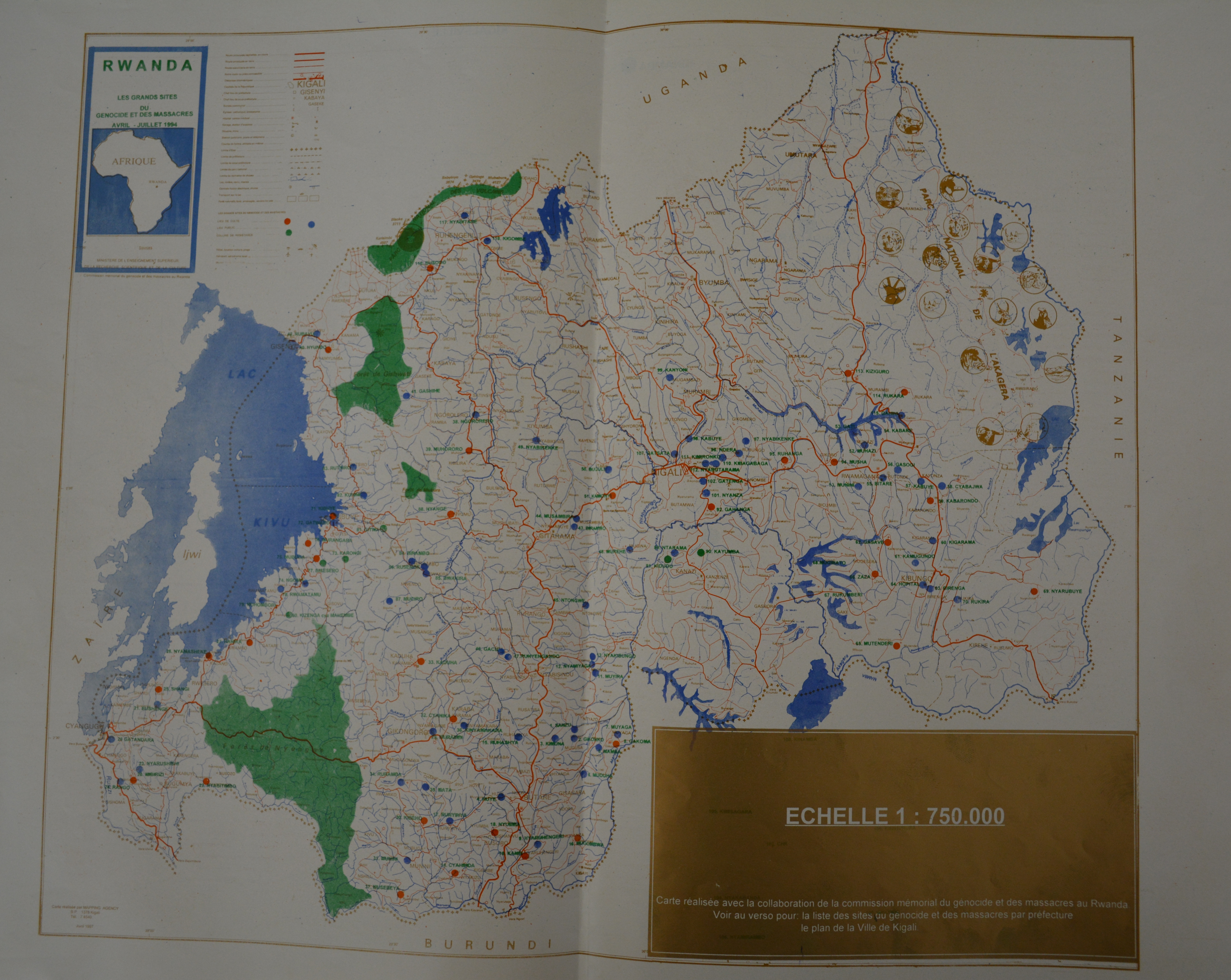
Mbonampeka who hails from the former Ruhengeri Prefecture, and a son-in-law of Dominique Mbonyumutwa, the interim first President of Rwanda during the transitional phase that followed the overthrow of the Rwandan monarchy, is accused of leading the Interahamwe militias that killed the Tutsi in Ndera seminary, Ndera Neuropsychiatric Teaching Hospital (CARAES), and Ndera Parish.
Mbonampeka was a member of the PL party but later aligned with its extremist faction known as PL Power which collaborated with the ruling MRND party and the extremist CDR party. Both parties played central roles in the 1994 Genocide against the Tutsi. The book, Rwanda death, despair and defiance, describes in detail, Mbonampeka's direct involvement in the killings at Ndera.
He also spoke repeatedly on the radio before and after April 6, 1994, saying that the Tutsi would be killed until the Rwandan Patriotic Front (RPF) ceased its attacks. In one broadcast on Radio Rwanda, he said that he had a message for the RPF; "Stop fighting this war if you do not want your supporters living inside Rwanda to be exterminated."
Jeanne Kanyana, a nurse who had a private dispensary in Remera, Kigali, and who lived in Ndera with her husband and two children told African Rights, which published Rwanda death, despair and defiance, that “Stanislas Mbonampeka, came to the seminary...with soldiers with guns...and interahamwe that were looking at everyone's ID card. Because my husband is a Hutu, I was able to slip into the Hutu group. The interahamwe then began to kill the Tutsis with their machetes.”
Mbonampeka supervised the killings at CARAES, and at Ndera Parish as he did at Ndera seminary. But on July 4, 1994, the Rwandan Patriotic Army (RPA) liberated the capital city. The French Opération Turquoise facilitated the escape of some high-ranking officials of the genocidal government, and Interahamwe militia into neighbouring Zaire (now DR Congo), where they were able to rearm and regroup, and Mbonampeka escaped with them. He found refuge in then Zaire, where he left and went to France, and later to Belgium.
In 2006, a court in France refused to return him to Rwanda, saying that “He fears to be killed and even to lose his life if he returns to Rwanda, because of his Hutu ethnicity, his political activities, and the possibility of being wrongly accused of genocide by the Rwandan authorities currently in power.”
Even if "justice delayed is justice denied", at least, after 30 years escaping justice, Mbonampeka was arrested on March 28, 2024, in Belgium. His arrest was a relief for survivors and families of the victims. Rwandan authorities have expressed a desire for him to be extradited to Rwanda to face justice.
Today, the 82-year-old remains detained in Haren prison, north of Brussels. Whether Belgian authorities will authorize his extradition to Rwanda remains uncertain.